
 Save
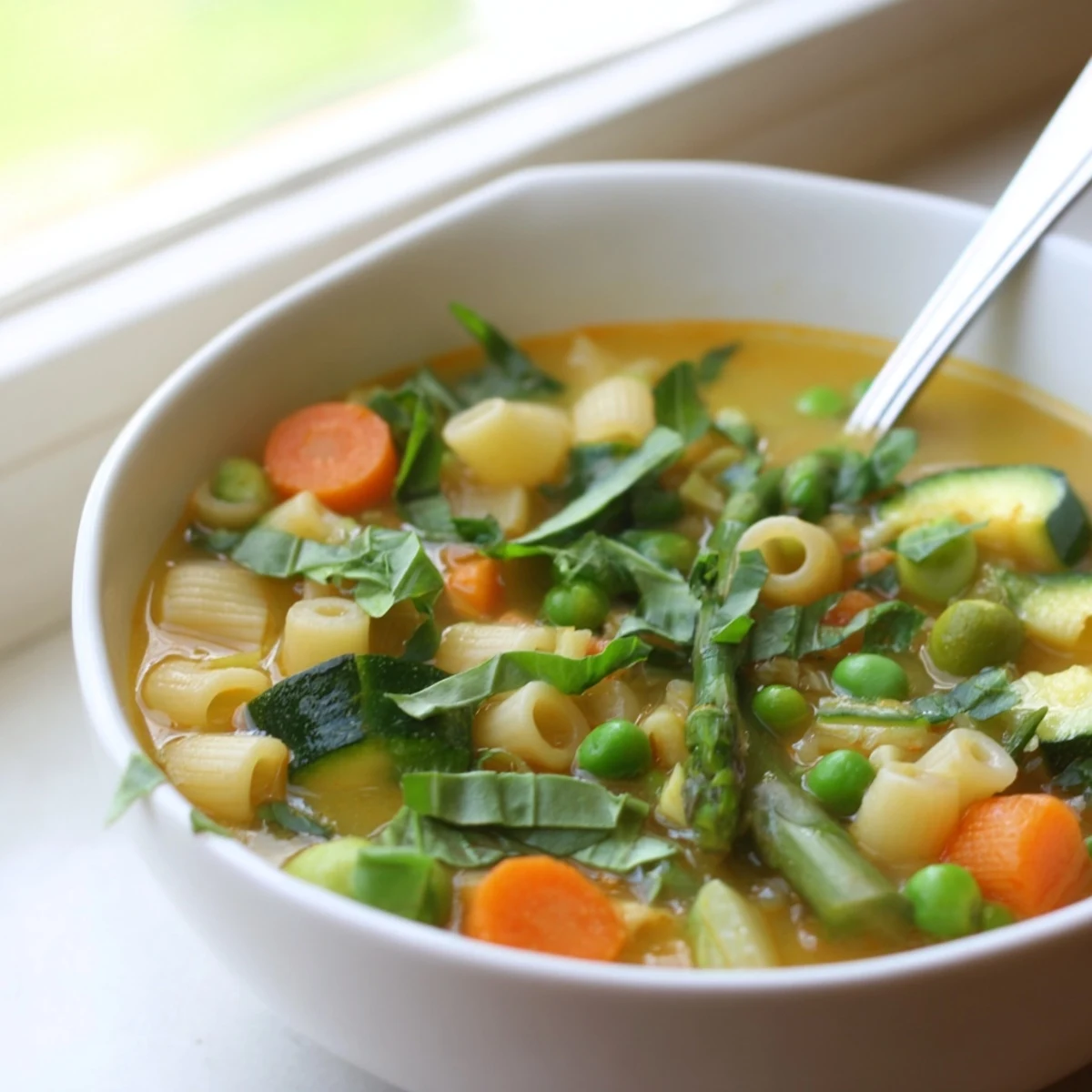
Save This vibrant spring minestrone celebrates the season's freshest vegetables. Tender asparagus, sweet peas, and zucchini simmer with small pasta in a flavorful tomato-based broth. A splash of lemon juice brightens the bowl, while fresh herbs add aromatic depth.
The soup comes together in under an hour, making it ideal for weeknight dinners. Leeks and garlic build a savory foundation, while baby spinach wilts in at the end for added nutrition. Serve with grated Parmesan and a drizzle of olive oil for a satisfying, vegetarian-friendly dish that captures the essence of spring cooking.
The first time I made this minestrone, I was trying to use up a farmers market haul that was threatening to turn on me. The asparagus had gone a little floppy, the peas were lingering in the crisper drawer, and there was half a leek looking at me reproachfully from the counter. I threw everything into a pot with some broth and pasta, expecting something edible but unremarkable. But when that first spoonful hit my mouth—bright with lemon, fragrant with fresh basil—I realized spring had officially arrived in my kitchen.
Last spring, my neighbor Sarah stopped by while I had a pot bubbling away on the stove. She ended up staying for lunch, and we sat at my kitchen table with steaming bowls, watching rain drizzle against the window. She asked for the recipe before shed even finished her bowl, and now every time she spots asparagus at the market, she sends me a text to say soups on her menu tonight.
Ingredients
- 1 tablespoon olive oil: Use a decent one here since it builds the flavor foundation
- 1 medium leek: White and light green parts only, sliced thinly—they sweeten as they cook
- 2 garlic cloves: Minced fresh, never jarred
- 2 medium carrots: Diced small so they cook through quickly
- 1 medium zucchini: Cut into same-size pieces as carrots for even cooking
- 1 cup asparagus: Trimmed and cut into 1-inch pieces, woody ends discarded
- 1 cup fresh or frozen peas: If using frozen, no need to thaw first
- 1 cup baby spinach: Added at the very end so it keeps its color
- 5 cups vegetable broth: Low-sodium lets you control the seasoning
- 1 can diced tomatoes: Drained well so the broth stays light and clear
- 2/3 cup small pasta: Ditalini or tiny shells work perfectly—nothing too big
- 1 teaspoon dried thyme: Adds an earthy layer underneath the fresh herbs
- 1 teaspoon dried basil: Blooms in the hot oil and infuses the whole pot
- Salt and pepper: Season gradually and taste as you go
- 2 tablespoons fresh parsley: Chopped, for that pop of green flavor
- 2 tablespoons fresh basil: Thinly sliced, never chopped—bruising makes it bitter
- Juice of 1/2 lemon: The secret ingredient that makes everything taste alive
- Optional garnishes: Grated Parmesan and a drizzle of your best olive oil
Instructions
- Build your flavor base:
- Heat olive oil in a large pot over medium heat. Add the sliced leek and cook for about 3 minutes, stirring occasionally, until its softened and fragrant but not browned.
- Add the aromatics:
- Stir in the garlic and cook for just 1 minute until you can smell it—any longer and it might turn bitter. Toss in the carrots and let them cook for 2 minutes to start softening.
- Add the spring vegetables:
- Add the zucchini, asparagus, and peas to the pot. Cook for 2 minutes, stirring gently, just until they start to brighten in color.
- Bring it together:
- Pour in the vegetable broth and drained diced tomatoes. Increase the heat to bring everything to a gentle bubble—you want to see movement but not a rolling boil.
- Cook the pasta:
- Add the pasta, dried thyme, and dried basil. Reduce heat to a simmer and cook uncovered for 8 to 10 minutes. The pasta should be al dente and vegetables tender but still holding their shape.
- Finish with freshness:
- Stir in the baby spinach, fresh parsley, fresh basil, and lemon juice. Cook for 1 to 2 minutes, just until the spinach wilts. Season with salt and pepper to taste.
- Serve it up:
- Ladle into warm bowls and top with grated Parmesan and a final drizzle of olive oil if you like. This soup wants to be eaten immediately while the vegetables are still vibrant.
 Save
Save My grandmother wouldve called this a kitchen soup—something you make by feel, by season, by what the day gives you. Now whenever I see that first bunch of asparagus appear at the market, I know its time to clear space on the stove.
Making It Your Own
One of the best things about this soup is how forgiving it is with substitutions. Green beans work beautifully in place of asparagus, and fava beans add an incredible creamy texture. Artichoke hearts turn it into something almost fancy. The key is keeping the vegetables roughly the same size so they cook evenly.
Timing Everything Right
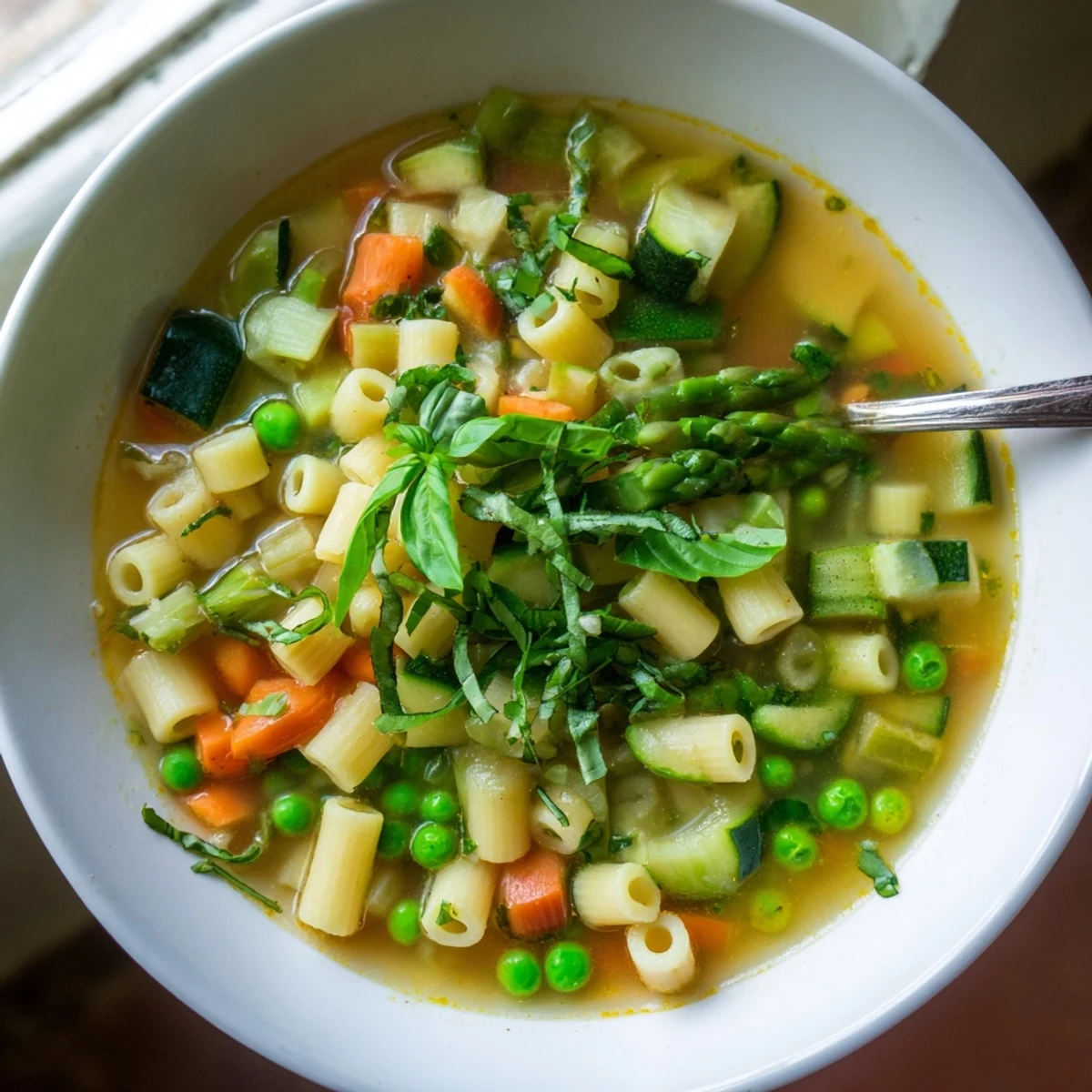
Ive learned that the difference between good spring minestrone and great spring minestrone is timing. If you add delicate vegetables too early, theyll be sad and overcooked by the time the pasta is done. The spinach goes in last—literally the final minute—so it stays bright green and fresh tasting. That bright color against the pale broth is what makes it feel like spring in a bowl.
Serving Suggestions
This soup is substantial enough to be a meal on its own, especially with some crusty bread for dunking. I love it with a simple green salad dressed in nothing but good olive oil and vinegar. On cooler spring evenings, a glass of crisp white wine alongside feels almost perfect.
- Grill some crusty bread rubbed with garlic while the soup simmers
- A dollop of pesto on top takes it in a completely delicious direction
- Keep extra lemon wedges at the table—some people love that extra bright hit
 Save
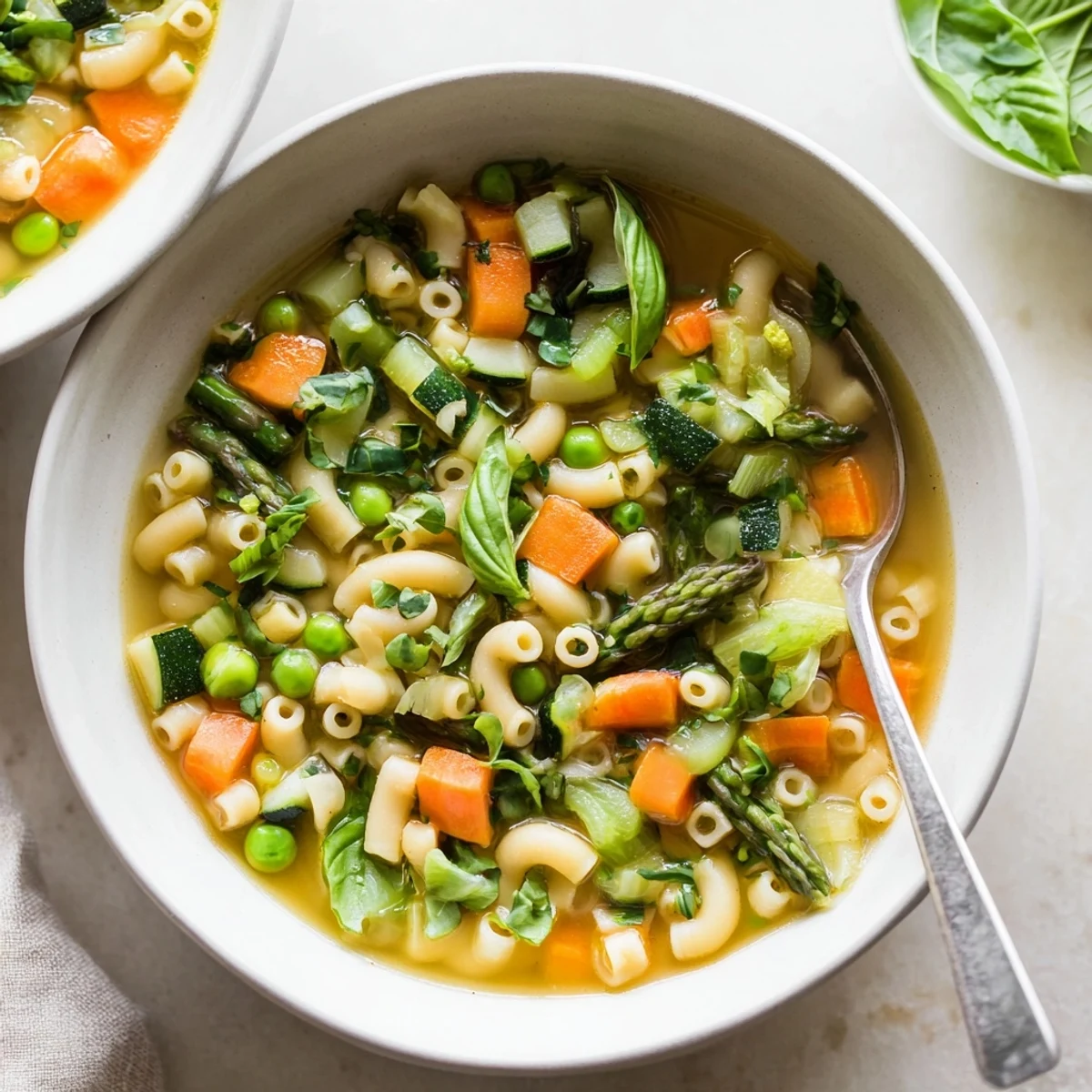
Save Spring in a bowl, ready in under an hour, guaranteed to make even a gray Tuesday feel a little more hopeful.
Questions & Answers
- → What vegetables work best in spring minestrone?
-
Asparagus, peas, zucchini, leeks, carrots, and baby spinach showcase spring's finest. You can also add green beans, fava beans, or artichoke hearts depending on what's fresh and available.
- → Can I make this soup gluten-free?
-
Absolutely. Simply substitute gluten-free pasta for the regular small shells or ditalini. The rest of the ingredients are naturally gluten-free, making this an easy adaptation.
- → How do I prevent the pasta from getting mushy?
-
Cook the pasta directly in the broth until just al dente, then serve immediately. If storing leftovers, the pasta will continue absorbing liquid—simply add extra broth when reheating to restore the desired consistency.
- → Is this soup freezer-friendly?
-
For best results, freeze without the pasta or slightly undercook it before freezing. Pasta can become soft when frozen and reheated. Alternatively, cook fresh pasta when serving leftovers stored in the refrigerator.
- → Can I make this vegan?
-
Yes. Omit the Parmesan garnish or use a plant-based alternative. The soup itself is naturally vegan, relying on vegetables, herbs, and olive oil for its rich flavor profile.
- → What type of pasta works best?
-
Small shapes like ditalini, small shells, or tubetti catch the broth beautifully while maintaining texture. These sizes also cook evenly alongside the vegetables for a harmonious bowl.