
 Save
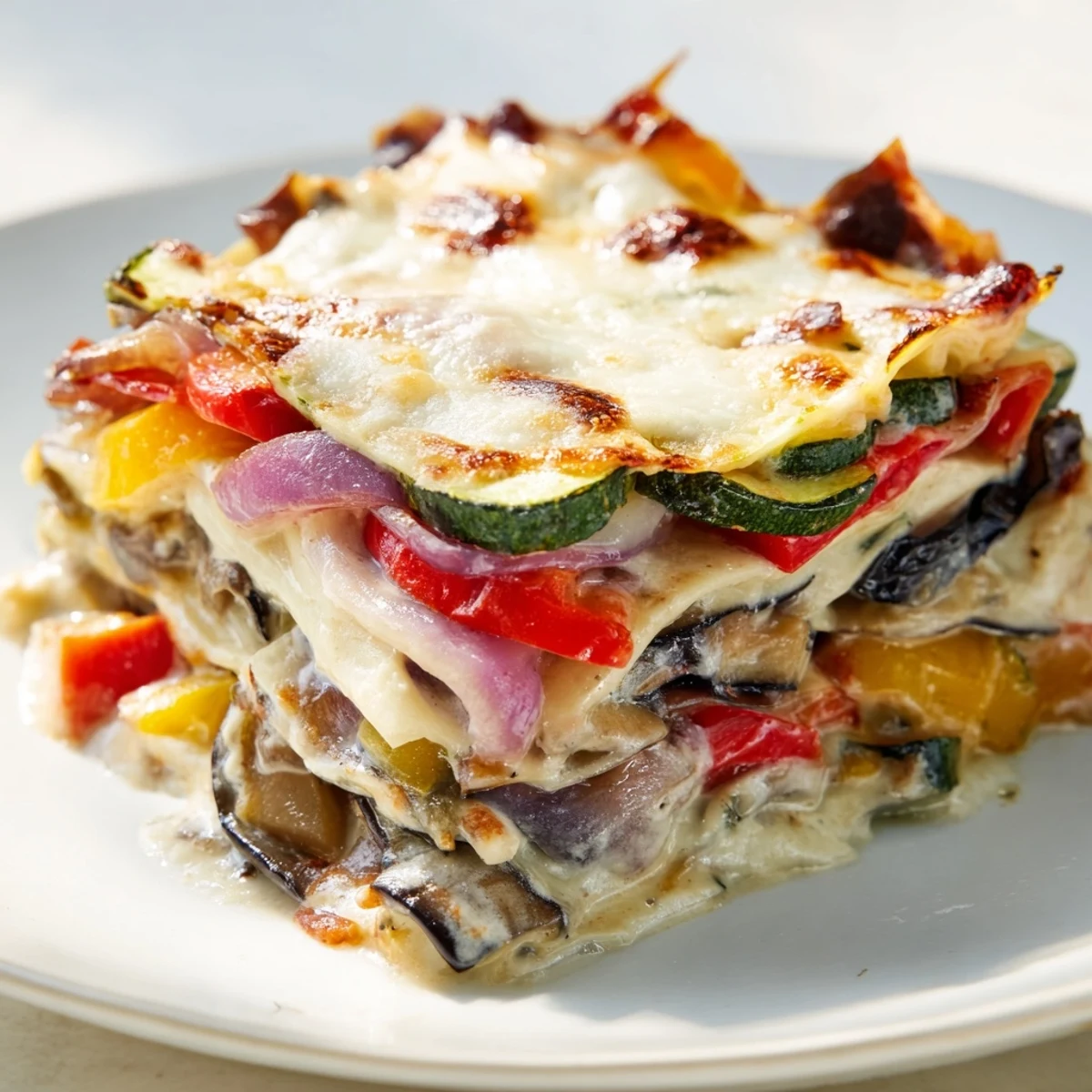
Save This Italian main highlights roasted seasonal vegetables blended with a rich tomato base and a smooth béchamel sauce. Layers of tender noodles alternate with flavorful fillings baked to a golden finish. Perfectly balanced herbs enhance the depth of each bite, while a mix of mozzarella and Parmesan adds creamy, melted cheese richness. This dish offers satisfying textures and cozy warmth, ideal for family meals or gatherings.
My neighbor Maria taught me this lasagna on a rainy Sunday when she brought over a baking dish still warm from her own kitchen. She spent three hours showing me how the roasted vegetables release their sweetness, and why the béchamel needs to be silky, not thick—that's what transforms lasagna from good to unforgettable. I've made it dozens of times since, and every time I layer it, I can still hear her voice describing the exact moment the sauce comes together.
I made this for my partner's parents on their first visit to our place, and I was so nervous about the béchamel breaking that I made it three times the night before. When we pulled it out of the oven and it was golden and bubbling perfectly, I realized I'd been worried for nothing—the technique is simple, it's just unfamiliar at first.
Ingredients
- Eggplant: Cut into half-inch cubes so they roast evenly and soak up the olive oil without falling apart. The smaller cuts brown better than big chunks.
- Zucchini: Slice thin so they soften quickly and layer nicely. Thicker slices stay too watery inside.
- Bell peppers (red and yellow): The mix of colors isn't just pretty—each color has slightly different sweetness and flavor depth.
- Red onion: Sliced and roasted transforms from sharp to mellow and slightly caramelized.
- Olive oil for roasting: Two tablespoons is just enough to get a light golden crust without making things greasy.
- Crushed tomatoes: Use a good quality brand because this is the foundation flavor—the sauce depends on it.
- Garlic: Three cloves minced and sautéed first builds the base that holds the whole sauce together.
- Dried oregano and basil: These Italian herbs bloom when they hit the warm sauce, releasing their flavor in a way fresh herbs can't.
- Unsalted butter and all-purpose flour: The ratio is equal parts, which makes the béchamel simple to remember and reliable every time.
- Whole milk, warmed: Warming it first prevents lumps and helps the sauce come together smoothly.
- Ground nutmeg: Just a quarter teaspoon added to the béchamel lifts everything—it's barely noticeable but makes a real difference.
- Mozzarella and Parmesan cheese: The mozzarella melts into creaminess while the Parmesan crisps on top and adds a sharp edge.
- No-boil lasagna noodles: They save time and actually work just as well as boiled ones in this layered dish.
Instructions
- Roast your vegetables:
- Heat your oven to 425°F, toss the eggplant, zucchini, peppers, and onion with olive oil, salt, and pepper, then spread them on a parchment-lined baking sheet. You'll know they're ready when the edges are browned and they've released some of their moisture—about 20 to 25 minutes, turning halfway through. The kitchen smells incredible at this point.
- Build the tomato sauce:
- In a saucepan over medium heat, sauté minced garlic in olive oil for just a minute until fragrant, then pour in the crushed tomatoes along with oregano, basil, salt, sugar, and pepper. Let it simmer uncovered for 15 to 20 minutes while the roasted vegetables cool—the sauce will thicken slightly and the flavors will deepen. Taste and adjust the seasoning if needed.
- Make the béchamel:
- Melt butter in a medium saucepan over medium heat, whisk in the flour, and cook for a minute or two until it smells a little toasty but doesn't brown. Slowly pour in the warm milk while whisking constantly to keep lumps from forming, then keep whisking for 5 to 7 minutes until the sauce is smooth and coats the back of a spoon. Stir in nutmeg, salt, and white pepper at the very end.
- Reduce the oven and layer:
- Lower the oven temperature to 375°F and spread a thin layer of tomato sauce on the bottom of your 9x13-inch baking dish. Lay noodles over it, then add one-third of the roasted vegetables, some tomato sauce spoonfuls, and a few ladles of béchamel. Sprinkle mozzarella and Parmesan, then repeat this layering two more times, ending with noodles on top.
- Finish the layers:
- Pour the remaining béchamel over the top layer of noodles, spreading it gently so every edge gets covered, then finish with the last of the mozzarella and Parmesan. This top layer is what turns golden and bubbly.
- Bake covered, then uncover:
- Cover the dish loosely with foil and bake for 30 minutes so the inside heats through without the top drying out. Then remove the foil and bake another 15 to 20 minutes until the top is golden brown and bubbling at the edges—this is what you're looking for to know it's done.
- Rest before slicing:
- Let the lasagna sit for 10 to 15 minutes after it comes out of the oven so the layers set and don't tumble apart when you cut into them. This is also when you can scatter fresh basil on top if you have it.
 Save
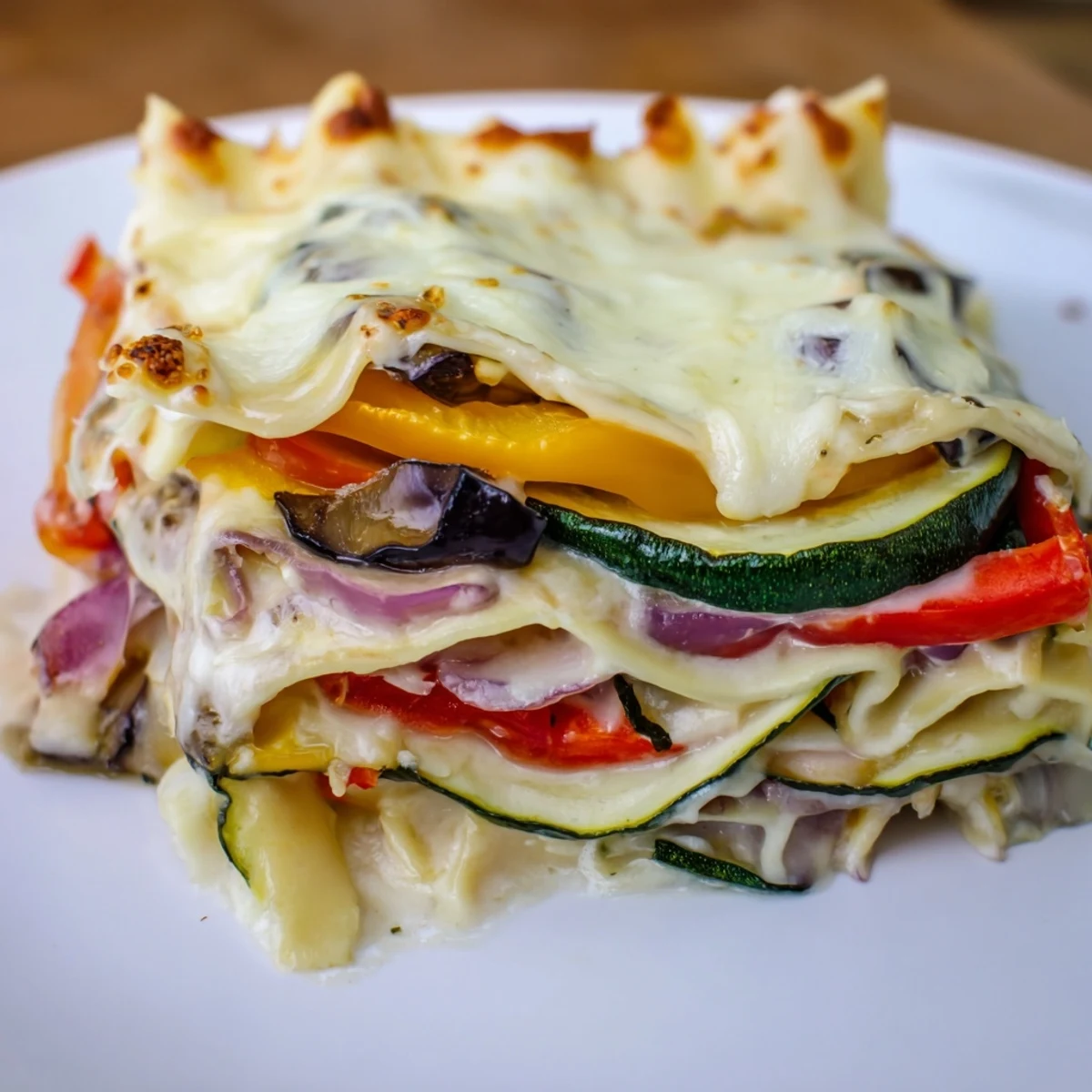
Save The moment that made me love this dish was when my friend took that first bite at dinner and closed her eyes for a second, then asked quietly if she could take the recipe home. It wasn't fancy or complicated, but it felt special in the way only a homemade lasagna made with care can feel.
The Magic of Roasted Vegetables
Roasting vegetables at high heat is a completely different skill from boiling or steaming them. When they hit the hot pan, the edges caramelize and concentrate their flavors—the eggplant becomes almost creamy, the peppers turn sweet, and the onion becomes jammy. This is what makes the whole lasagna sing instead of just tasting like a pile of vegetables in cream sauce. Don't rush this step and don't skip turning them halfway through.
Béchamel Mastery
The béchamel is honestly easier than people think once you understand what it actually is: a roux (flour and butter cooked together) thinned out with milk to create a silky sauce. The key is patience and constant whisking—you're not trying to create something thick, you're looking for something that pours like heavy cream and coats a spoon. It should feel luxurious, not gluey. I used to overthink it until I realized that watching it happen is half the fun of making this dish.
Why This Lasagna Works
Italian lasagna relies on balance—the acid from tomatoes, the richness from the béchamel, the sweetness from roasted vegetables, and the umami punch from Parmesan cheese all play together. Every layer matters, and that's why people come back for this version over and over. It's not complicated, but it's thoughtful.
- You can prep and assemble this the morning of and bake it in the evening—just add 10 minutes to the covered bake time if it's still cold from the refrigerator.
- Leftovers actually improve after sitting overnight as the flavors meld, so make this for a dinner where you'll want lunch the next day.
- If you want to add spinach or mushrooms, sauté them first and squeeze out any moisture before layering so they don't make the dish watery.
 Save
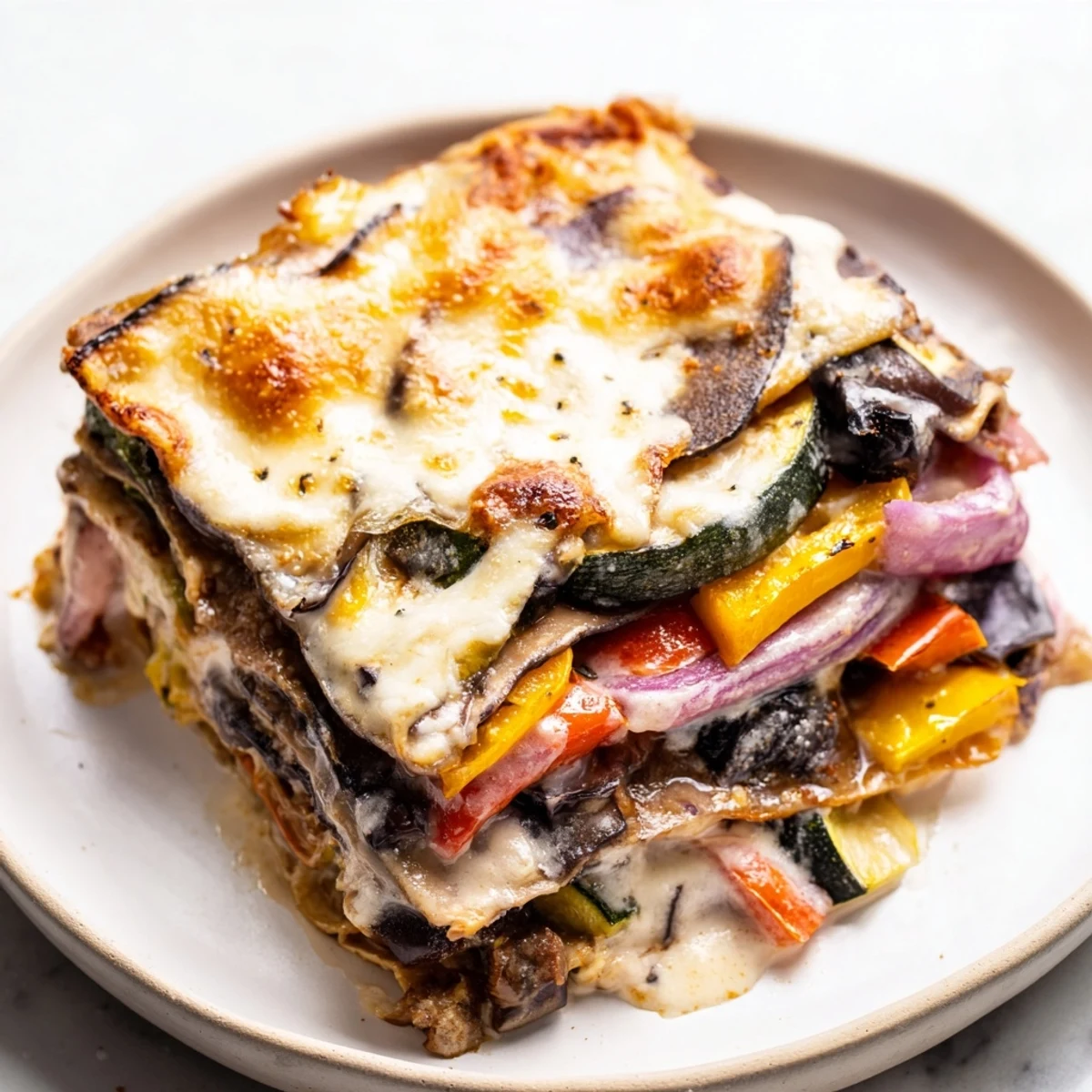
Save This lasagna is the kind of dish that brings people together without trying too hard. Make it for someone you care about, and I promise they'll remember it.
Questions & Answers
- → How do I roast vegetables evenly?
-
Cut vegetables into uniform sizes and toss with oil, salt, and pepper. Spread them in a single layer on a baking sheet to ensure even roasting and caramelization.
- → Can I use fresh herbs instead of dried in the tomato sauce?
-
Yes, fresh oregano and basil can be substituted. Add them towards the end of simmering to preserve their vibrant flavors.
- → What is the purpose of béchamel in this dish?
-
Béchamel adds creamy richness and moisture, balancing the acidity of tomato sauce and enhancing the layered texture.
- → How should I assemble the layers for the best structure?
-
Begin with sauce, then noodles, followed by vegetables, tomato sauce, béchamel, and cheese. Repeat to build layers that set well when baked.
- → Can I prepare this dish ahead of time?
-
Yes, assembly can be done in advance. Cover and refrigerate, then bake before serving for optimal freshness and flavor.