
 Save
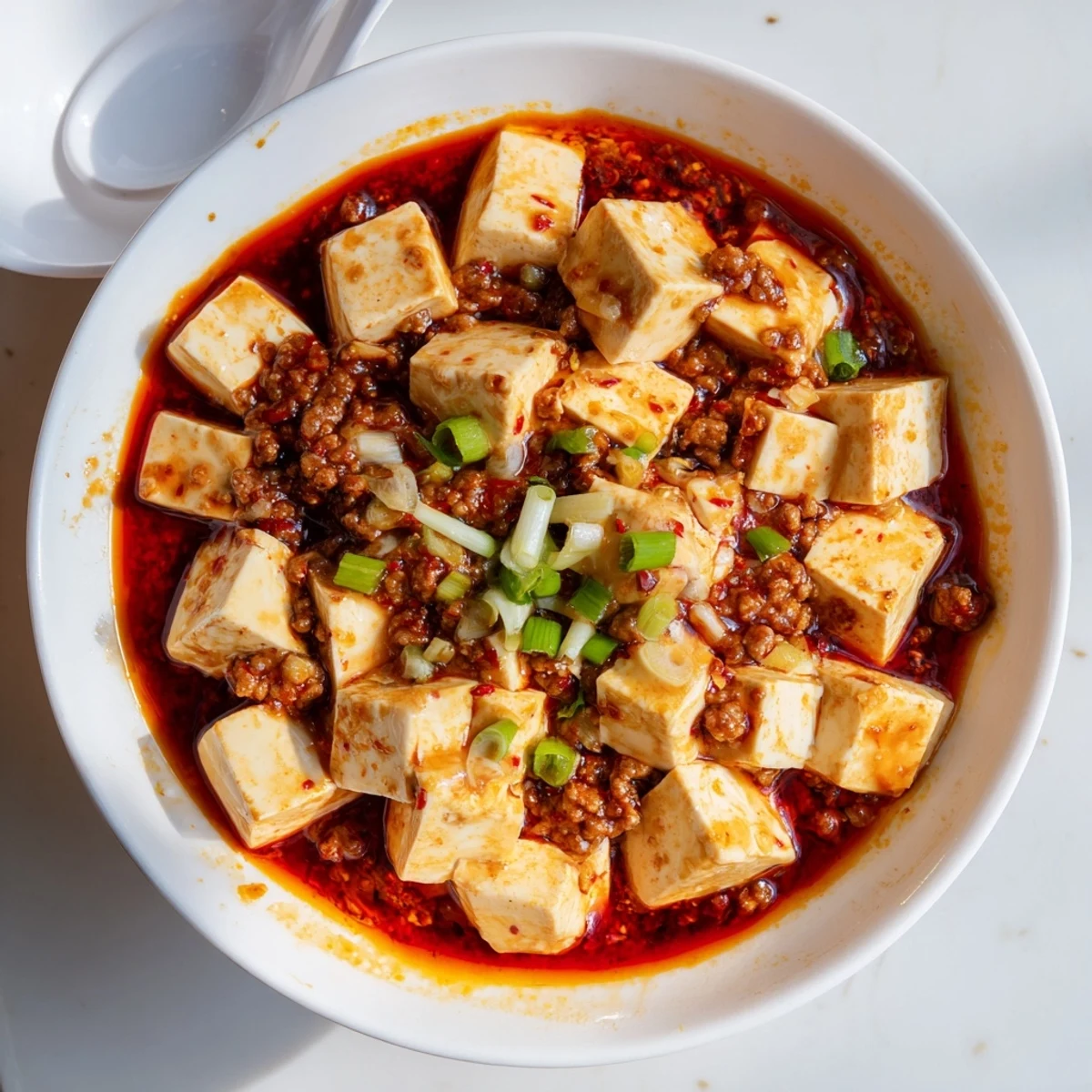
Save This beloved Sichuan specialty combines tender tofu cubes with savory ground pork in a rich, fiery sauce. The magic lies in doubanjiang fermented bean paste, which creates that signature red oil and deep umami flavor. Toasted Sichuan peppercorns deliver the unique numbing sensation that sets this dish apart from other stir-fries.
The preparation involves briefly soaking tofu in salted water to maintain its silky texture during cooking. Ground pork provides protein and richness, though plant-based alternatives work beautifully for vegetarian versions. The sauce thickens naturally with cornstarch, creating a glossy coating that clings perfectly to every cube.
Ready in just over half an hour, this restaurant-quality dish brings authentic Sichuan flavors to your home kitchen. Serve with steamed jasmine rice to balance the heat and soak up the incredible sauce.
The first time Mapo Tofu appeared on my dinner table, I was eleven years old and convinced I hated anything spicy. My grandmother had just returned from a trip to Chengdu and could not stop talking about this bowl of soft tofu swimming in red oil. I took the tiniest possible bite, expecting pain, and instead found this incredible dance of heat, savory depth, and a tingling sensation that made my entire mouth feel alive. That single bite changed everything I thought I knew about flavor.
Last winter during a particularly brutal snowstorm, my neighbor knocked on my door with a container of doubanjiang she had brought back from Sichuan province. We spent the afternoon hovering over my wok, adjusting ratios and debating the perfect balance between numbing and spicy. Her family has been making Mapo Tofu for three generations, and watching her hands move through the steps taught me more about Chinese cooking than any cookbook ever could.
Ingredients
- Soft or medium firm tofu: The hot water bath technique firms it up just enough to survive stirring while keeping that melt in your mouth texture
- Ground pork: Adds essential richness and body to the sauce, though chicken or plantbased alternatives work beautifully
- Doubanjiang: This fermented broad bean chili paste is the soul of the dish, worth seeking out at an Asian market
- Sichuan peppercorns: Toasting these freshly before grinding releases their floral citrus notes and signature numbing properties
- Cornstarch slurry: The secret to achieving that glossy restaurant style sauce that coats every cube of tofu
Instructions
- Prepare the tofu:
- Cut the tofu into uniform 2cm cubes and let them soak in hot salted water for 5 minutes, which helps them hold their shape during cooking.
- Brown the pork:
- Heat oil in your wok over medium high heat and cook the ground pork until fully browned, breaking up clumps as it cooks.
- Bloom the aromatics:
- Add garlic, ginger, and white scallion parts, stirring for just 1 minute until fragrant but not browned.
- Fry the paste:
- Stir in the doubanjiang and fermented black beans, cooking until the oil takes on a rich red color and the kitchen smells incredible.
- Build the sauce:
- Pour in the soy sauce, wine, sugar, and broth, then bring everything to a gentle simmer.
- Add the tofu:
- Gently lower the tofu cubes into the sauce and let them simmer for 5 to 7 minutes, absorbing all those complex flavors.
- Season and thicken:
- Stir in the chili oil and ground peppercorns, then add the cornstarch slurry and cook until the sauce thickens beautifully.
 Save
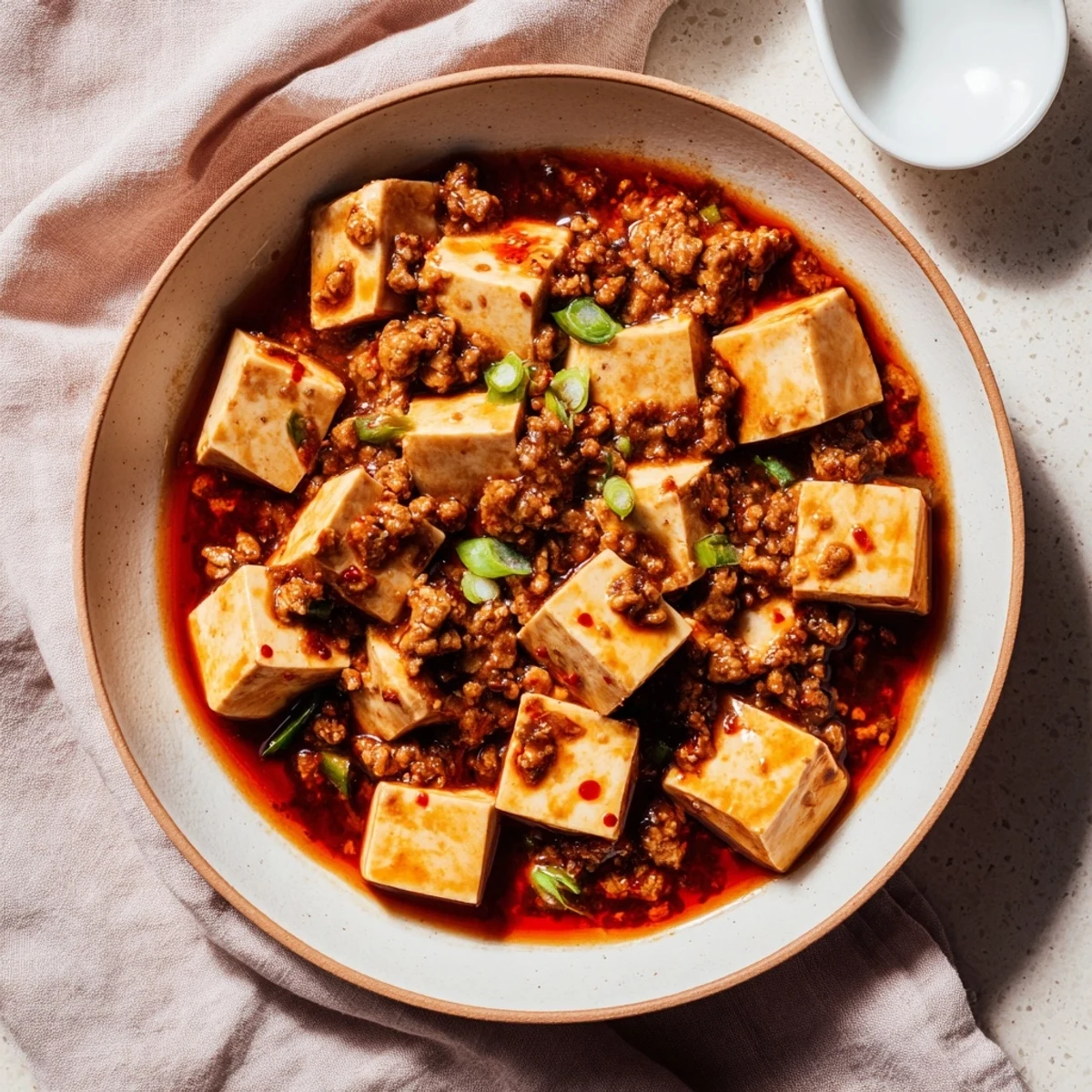
Save My daughter used to ask for this every time she had friends over after school, watching wide eyed as I measured out the bright red chili paste. Now she texts me from college whenever she finds a restaurant that serves authentic Mapo Tofu, and I know those taste memories are anchoring her to home even from hundreds of miles away.
Mastering the Heat Balance
Start with half the called for chili oil and peppercorns if you are new to Sichuan cuisine. You can always add more, but you cannot take it back once it is in the pot. The goal is a harmonious balance where heat enhances rather than overwhelms the other flavors.
Choosing Your Tofu
Soft tofu gives you that luxurious melt in your mouth experience, while medium firm holds its shape better if you plan to reheat leftovers. I have used both successfully, but I recommend extra soft tofu for first time Mapo Tofu makers.
Serving Suggestions
This dish demands plain steamed jasmine rice to soak up every drop of that incredible sauce. The cool blandness of the rice provides the perfect canvas for all those bold flavors.
- Prepare a simple cucumber salad dressed with vinegar to cool your palate between bites
- Keep extra steamed rice handy because everyone will want seconds
- Have cold milk or plain yogurt ready if anyone needs relief from the heat
 Save
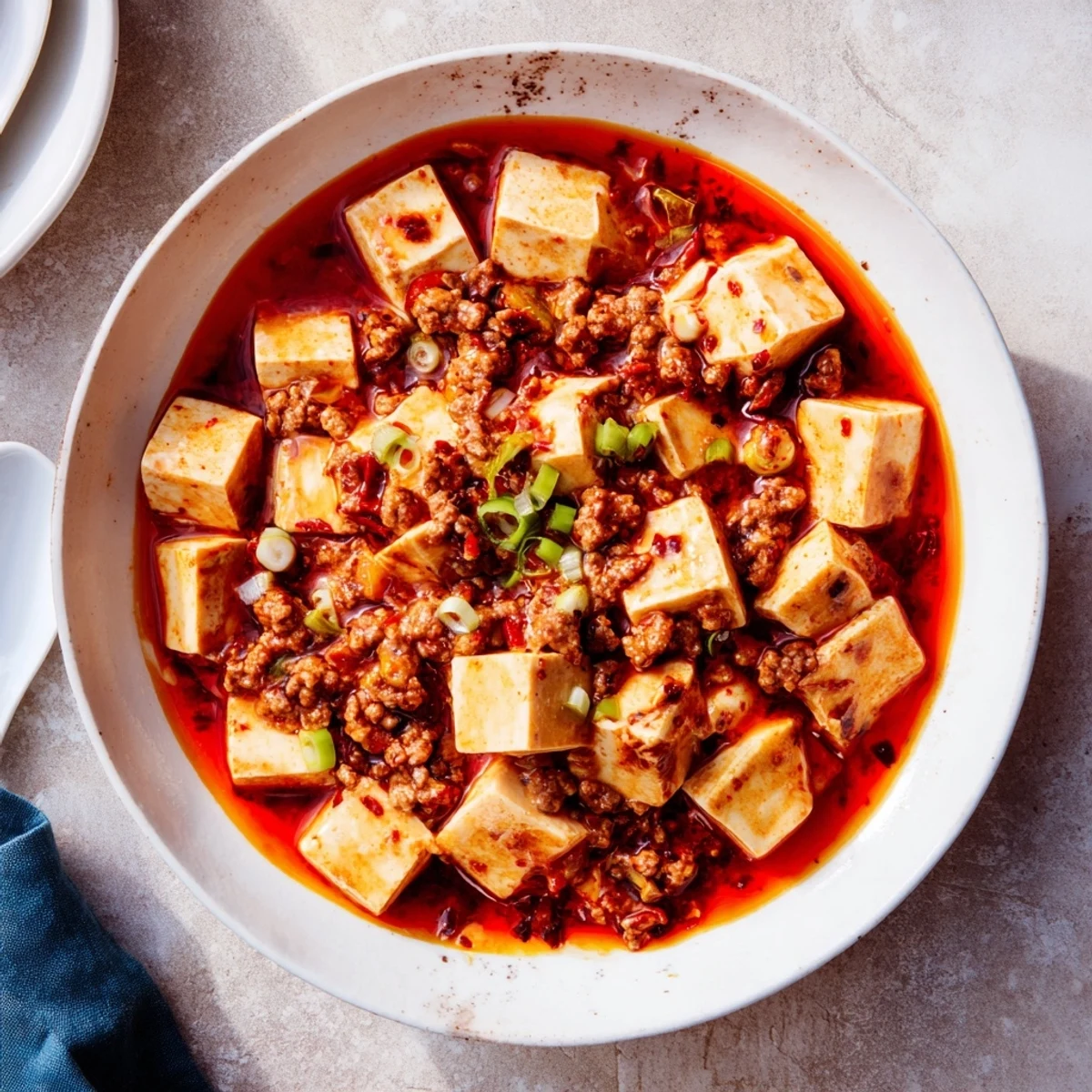
Save There is something deeply satisfying about making a dish that has been perfected over centuries in Sichuanese kitchens. Every bowl connects you to that legacy of bold, unapologetic flavor that makes Chinese cooking so extraordinary.
Questions & Answers
- → What makes Mapo Tofu authentic?
-
Authentic Mapo Tofu relies on doubanjiang fermented broad bean paste for its signature red oil and deep flavor. The numbing sensation from toasted Sichuan peppercorns is essential, along with fermented black beans that add complexity. Traditional versions use ground pork, though variations exist.
- → How do I prevent tofu from breaking apart?
-
Soak cubed tofu in hot, lightly salted water for 5 minutes before cooking. This firms the texture and helps cubes hold their shape. When adding to the pan, slide them in gently rather than dropping. Use a spatula to stir carefully, avoiding vigorous motions that could break delicate pieces.
- → Can I make this vegetarian?
-
Absolutely. Substitute ground pork with plant-based mince or finely chopped shiitake mushrooms for umami. Ensure your doubanjiang is vegetarian-friendly, as some brands contain pork. Use vegetable broth instead of chicken stock. The result remains deeply flavorful and satisfying.
- → How spicy is this dish?
-
Traditional Mapo Tofu delivers medium-high heat with significant numbing from Sichuan peppercorns. Adjust spice levels by varying chili oil quantity and doubanjiang amount. For milder versions, reduce both components. The numbing sensation comes from peppercorns and can't be substituted with regular pepper.
- → What should I serve with Mapo Tofu?
-
Steamed jasmine rice is the classic accompaniment, its neutral flavor balancing intense spice. Blanched greens like bok choy or Chinese broccoli provide refreshing contrast. Cold cucumber salad offers a cooling element. Avoid heavy sides—the rich sauce deserves center stage.
- → Can I prepare components ahead?
-
Cube tofu and store in water up to 24 hours. Mix sauce ingredients in advance and refrigerate. Pre-mince garlic, ginger, and scallions. However, cook the dish just before serving—texture and flavor peak when freshly made. Reheated tofu tends to break down more easily.