
 Save
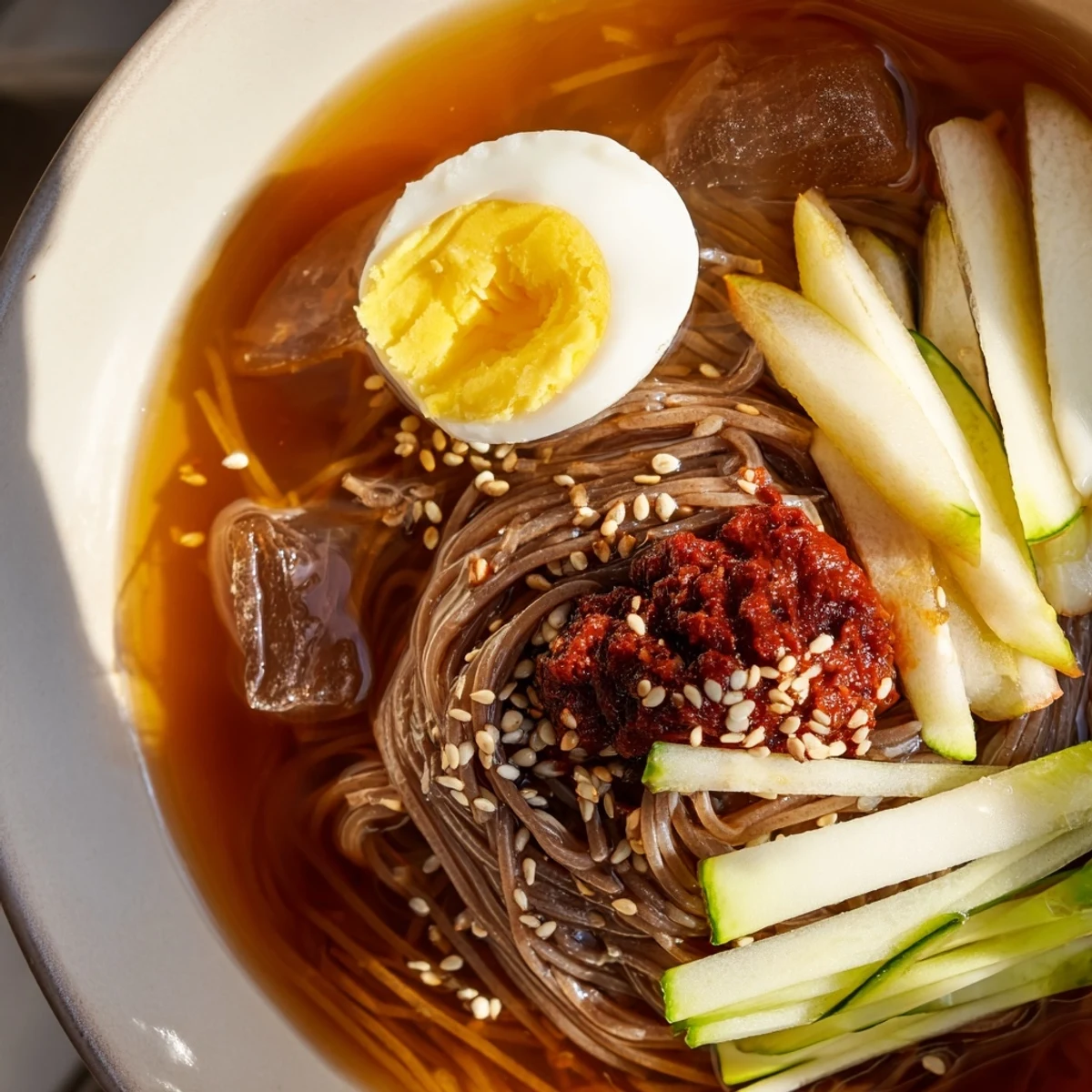
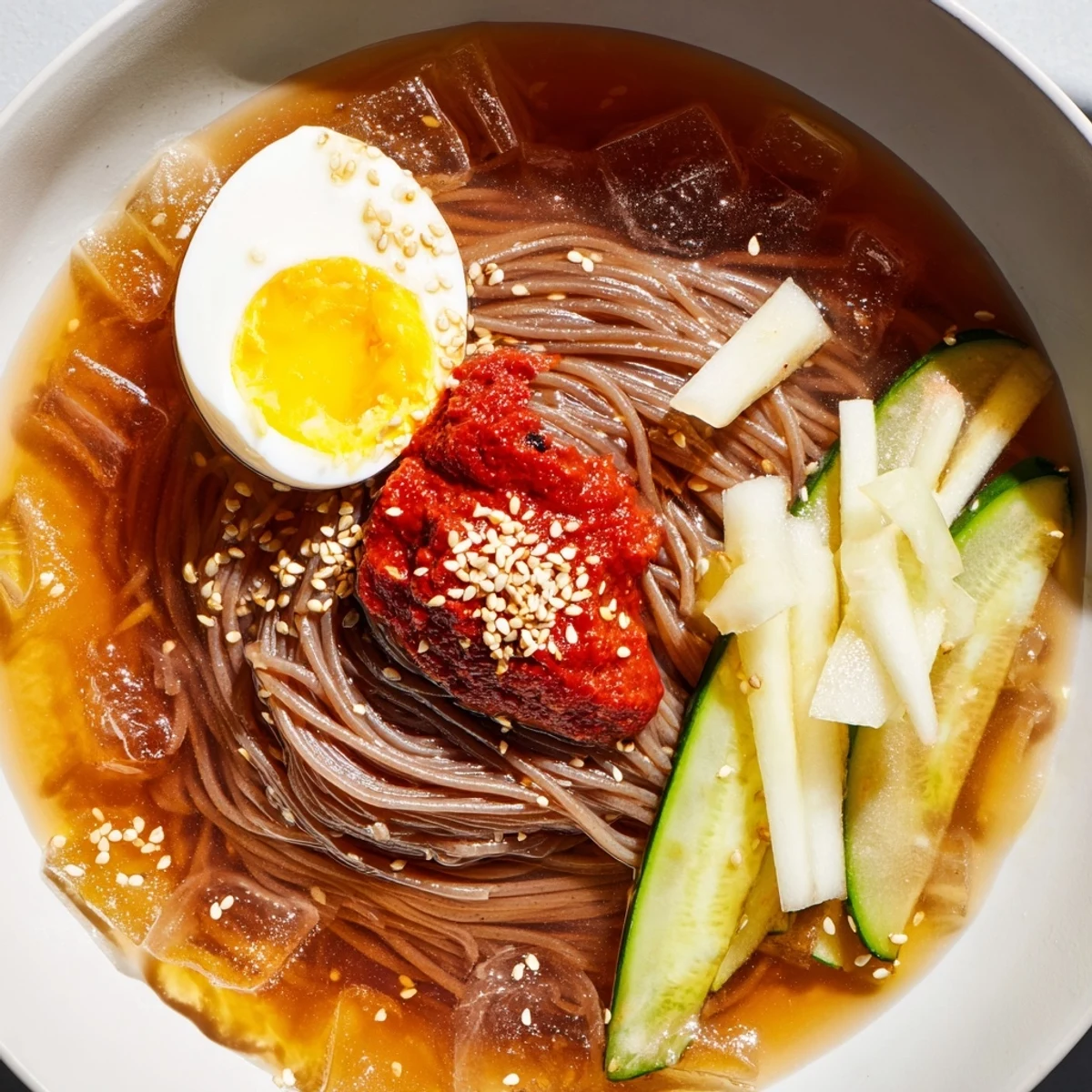
Save Experience the refreshing taste of authentic Korean naengmyeon, featuring springy buckwheat noodles served ice-cold in a perfectly balanced tangy-sweet broth. This beloved summer dish comes together in just 40 minutes, combining chewy noodles with crisp cucumber, sweet Asian pear, tender beef, and creamy hard-boiled eggs. The secret lies in the chilled broth—infused with rice vinegar, sesame oil, and just enough sweetness to balance the tang. Traditionally served with ice cubes to maintain its bracing temperature, this dish offers complete sensory relief on sweltering days while delivering satisfying nutrition with 17g protein per serving.
The air conditioning in my tiny apartment had broken during the worst heatwave of the summer, and my friend Sarah suggested we try making naengmyeon at her place instead of suffering through restaurant crowds. We sat cross-legged on her kitchen floor, sweating over steaming pots while the broth chilled in the fridge, laughing about how we were cooking hot noodles to stay cool.
My grandmother used to say cold noodle soup was medicine for the soul, especially after arguing with my sister about something silly. The sharp tang of vinegar would cut through the tension, and we would end up laughing over slurping noodles too fast.
Ingredients
- Beef broth: Homemade gives the cleanest flavor, but low-sodium works perfectly fine if you are short on time
- Rice vinegar: This is the backbone of the entire dish, so do not substitute with other vinegars if you can avoid it
- Sugar: Balances the sharpness without making the broth sweet, just rounded and harmonious
- Sesame oil: Adds that signature Korean aroma that makes the dish feel authentic and comforting
- Naengmyeon noodles: These chewy buckwheat noodles are non-negotiable for the real experience, though soba works in a pinch
- Asian pear: Provides crisp sweetness and texture that pairs beautifully with the tangy broth
- Cucumber: Adds freshness and crunch that makes every bite interesting
Instructions
- Mix the magic broth:
- Whisk together your broth, vinegar, sugar, soy sauce, sesame oil, and salt until everything dissolves completely. Taste and adjust the balance, then let it get ice cold in the fridge for at least an hour.
- Prep your toppings like a pro:
- Boil your eggs for exactly ten minutes, then plunge them into cold water for easy peeling. Slice your beef, cucumber, and Asian pear paper-thin so they do not distract from the noodles.
- Cook and chill the noodles:
- Boil the noodles for three to four minutes, then drain and rinse under freezing cold water until they are completely cool. Keep rinsing until the water runs clear and the noodles feel bouncy.
- Bring it all together:
- Divide the cold noodles into bowls, pour over that chilled broth, and arrange your toppings beautifully. Add ice cubes right before serving to keep everything perfectly cold.
 Save
Save Last summer, my neighbor brought over a bowl after I mentioned how much I missed authentic Korean food from my trip to Seoul years ago. We sat on her balcony in the humidity, eating cold soup and talking about how food can transport you across oceans and back in time.
Making Ahead
The broth actually improves after a day in the fridge, so I always double the recipe and keep a jar ready. The noodles are best cooked fresh, but you can slice all your toppings the night before and store them separately.
Broth Variations
Dongchimi brine from radish water kimchi adds authentic fermented depth that you cannot replicate otherwise. If you want something lighter, chicken broth works beautifully, though the flavor profile changes slightly.
Serving Suggestions
Set out small bowls of extra vinegar, gochujang, and yellow mustard so everyone can customize their bowl. The noodles are traditionally eaten with scissors, so keep kitchen shears nearby for easy portioning.
- Offer kimchi on the side for extra probiotics and spice
- Some people like adding a splash of mustard oil for heat
- Remember that the broth is meant to be slurped, not saved
 Save
Save There is something deeply satisfying about eating cold soup on a hot day, like you have discovered a secret hack for surviving summer. Enjoy every slurp.
Questions & Answers
- → What makes naengmyeon noodles unique?
-
Naengmyeon noodles are distinctive for their extra-chewy, springy texture created from buckwheat and sweet potato starch. They maintain their firmness even when soaked in cold broth for extended periods, unlike wheat noodles that can become mushy. The noodles are traditionally quite long and meant to be slurped whole, though many home cooks cut them with kitchen scissors for easier eating.
- → Can I make this dish ahead of time?
-
Absolutely—the broth actually improves when made a day in advance, allowing flavors to meld. Prepare the broth and store it in the refrigerator. Cook and chill the noodles separately, then assemble just before serving. Keep all toppings prepped and ready in containers. The key is serving everything thoroughly chilled, so pre-preparation works perfectly with this dish.
- → What can I substitute for beef brisket?
-
Thinly sliced pork bulgogi, shredded rotisserie chicken, or even pan-seared tofu work beautifully as alternatives. For a vegetarian version, use mushrooms or additional Asian pear for bulk. The protein component adds savory depth, but the tangy broth carries the dish perfectly even with lighter substitutions.
- → Is this dish served year-round in Korea?
-
While naengmyeon is most popular during summer's peak heat, many Koreans enjoy it year-round, especially as a light lunch or dinner. The cold, refreshing nature pairs exceptionally well with hot Korean BBQ and stews, making it a common side dish even in winter. Some restaurants even serve it with hot broth (onmyeon) during colder months.
- → How spicy should naengmyeon be?
-
Traditional mul naengmyeon (water version) is mild and slightly sour rather than spicy. Heat comes from tableside additions like gochujang or mustard paste, allowing each diner to customize. Start with just a dollop of gochujang if you're sensitive to spice, or add more generously if you prefer kick. The vinegar provides the primary tang, while spice is optional.
- → Why are ice cubes added to the bowl?
-
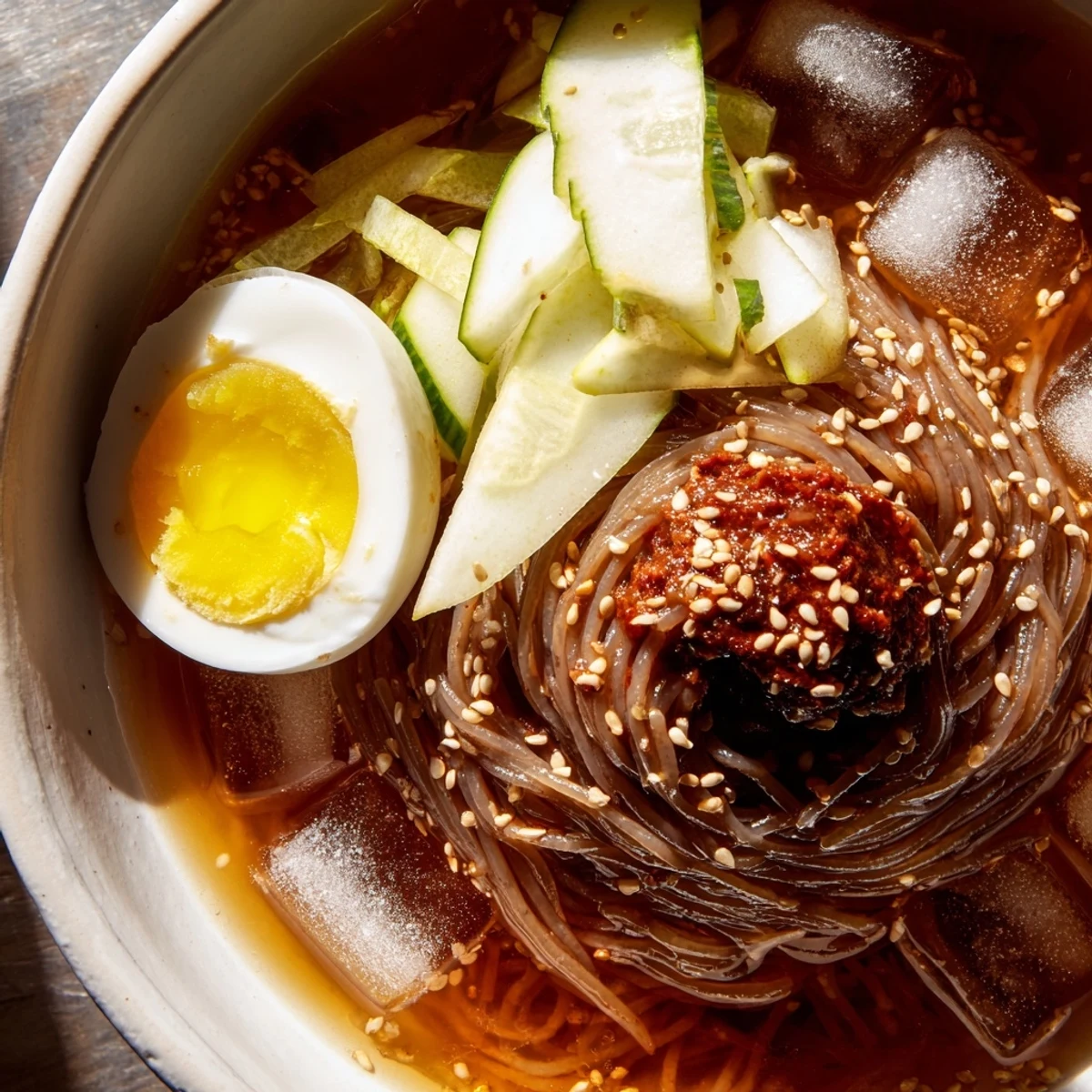
Ice cubes serve two purposes: they keep the broth at optimal cold temperature throughout the meal, and they dilute the flavors slightly as they melt for a more subtle taste. In Korea, some restaurants even freeze the broth into slush. Using chilled bowls beforehand helps maintain temperature longer. The colder the naengmyeon, the more refreshing the experience.