
 Save
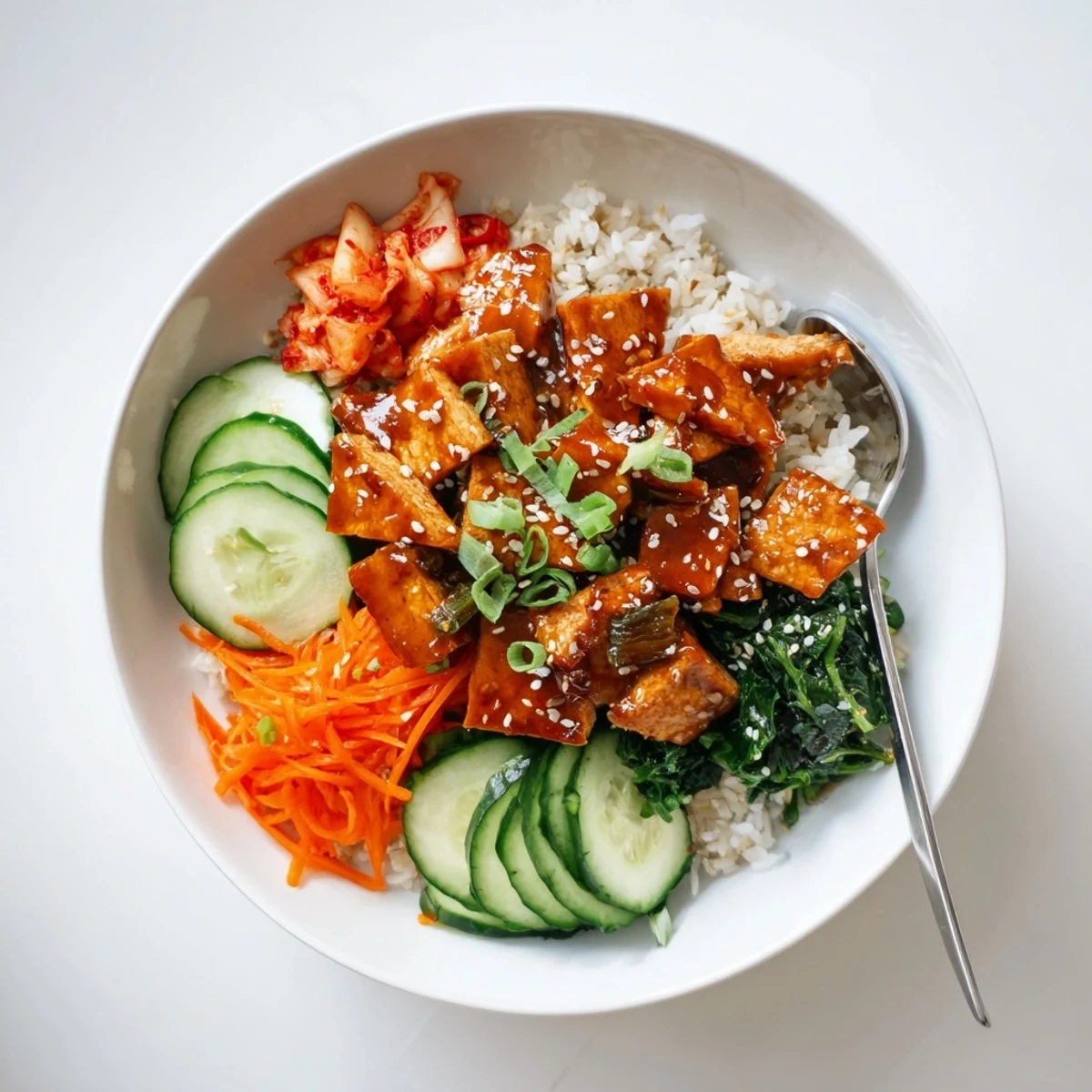
Save This Korean-inspired bowl delivers serious comfort with crispy shredded tofu coated in a homemade bulgogi sauce made from soy sauce, brown sugar, mirin, sesame oil, garlic, ginger, and gochujang. The tofu gets crispy either in the oven or on the stovetop, then gets tossed straight into the sauce while still hot so it absorbs every bit of that sweet and savory glaze. Served over warm short-grain rice with julienned carrot, sliced cucumber, sautéed spinach, and optional kimchi, it comes together in about 40 minutes. You can easily swap in brown rice or cauliflower rice, add mushrooms or avocado, and make it gluten-free with tamari. At around 380 calories per serving with 16 grams of protein, it is a satisfying option that works for weeknight dinners or meal prep alike.
There was a Tuesday last winter when my apartment smelled so intensely of toasted sesame and gochujang that my neighbor actually knocked to ask what restaurant I was ordering from. I laughed and held up a bowl of shredded tofu that looked nothing like takeout but tasted like something you would wait in line for. That moment sort of rewired how I thought about plant-based cooking.
I first made this for a friend who swore she did not like tofu in any form. She went quiet after the first bite and then asked for the recipe before she even finished chewing. That kind of silence is the best compliment a cook can get.
Ingredients
- Extra-firm tofu: Pressing this thoroughly is nonnegotiable because any remaining water will fight the cornstarch and you will end up with steamed shreds instead of crispy ones
- Cornstarch: This creates the thin, crackly shell that separates decent crispy tofu from the kind that shatters when you bite it
- Neutral oil: Sunflower or canola works because it will not compete with the sesame oil already in the sauce
- Soy sauce: The salty backbone of the whole dish so taste your brand and adjust since some run much saltier than others
- Brown sugar: This caramelizes against the hot tofu and gives the sauce that sticky, lacquered finish you want
- Mirin: Adds a gentle sweetness and slight acidity that rounds out the soy sauce if you cannot find it rice vinegar works in a pinch
- Sesame oil: Just one tablespoon carries an enormous amount of flavor so do not be tempted to add more or it will taste soapy
- Gochujang: This is where the soul of the dish lives even a small amount transforms the sauce into something deeply Korean
- Fresh ginger and garlic: Use the real thing here because jarred versions taste flat and watery by comparison
- Short-grain white rice: Its slightly sticky texture holds the bowl together in a way that long-grain or basmati never could
- Carrot and cucumber: These provide a cool, crunchy contrast that cuts through the rich saucy tofu beautifully
- Kimchi: Optional in theory but honestly it ties the whole bowl together with fermented tang
Instructions
- Get things hot:
- Preheat your oven to 220°C or set a large non-stick skillet over medium-high heat if you prefer pan-frying.
- Shred and coat:
- Use your hands or a fork to pull the pressed tofu into bite-sized shreds then toss with cornstarch until every piece has a dusty, even coating.
- Crisp the tofu:
- Spread the shreds on a parchment-lined tray, drizzle with oil, and bake 25 to 30 minutes tossing halfway until deeply golden and audibly crispy when you shake the pan.
- Whisk the sauce:
- While the tofu bakes combine soy sauce, brown sugar, mirin, sesame oil, garlic, ginger, gochujang, sesame seeds, and green onion in a bowl until the sugar dissolves.
- Prep the rice and veggies:
- Divide warm rice into bowls, quickly blanch and season the spinach with salt and a few drops of sesame oil, then julienne the carrot and slice the cucumber.
- Bring it all together:
- Toss the hot crispy tofu directly into the bulgogi sauce, coat every shred, then pile it over the rice with all your veggies and kimchi.
- Garnish and serve:
- Scatter extra sesame seeds, sliced red chili, and chopped green onion on top and get it to the table before the tofu loses its crunch.
 Save
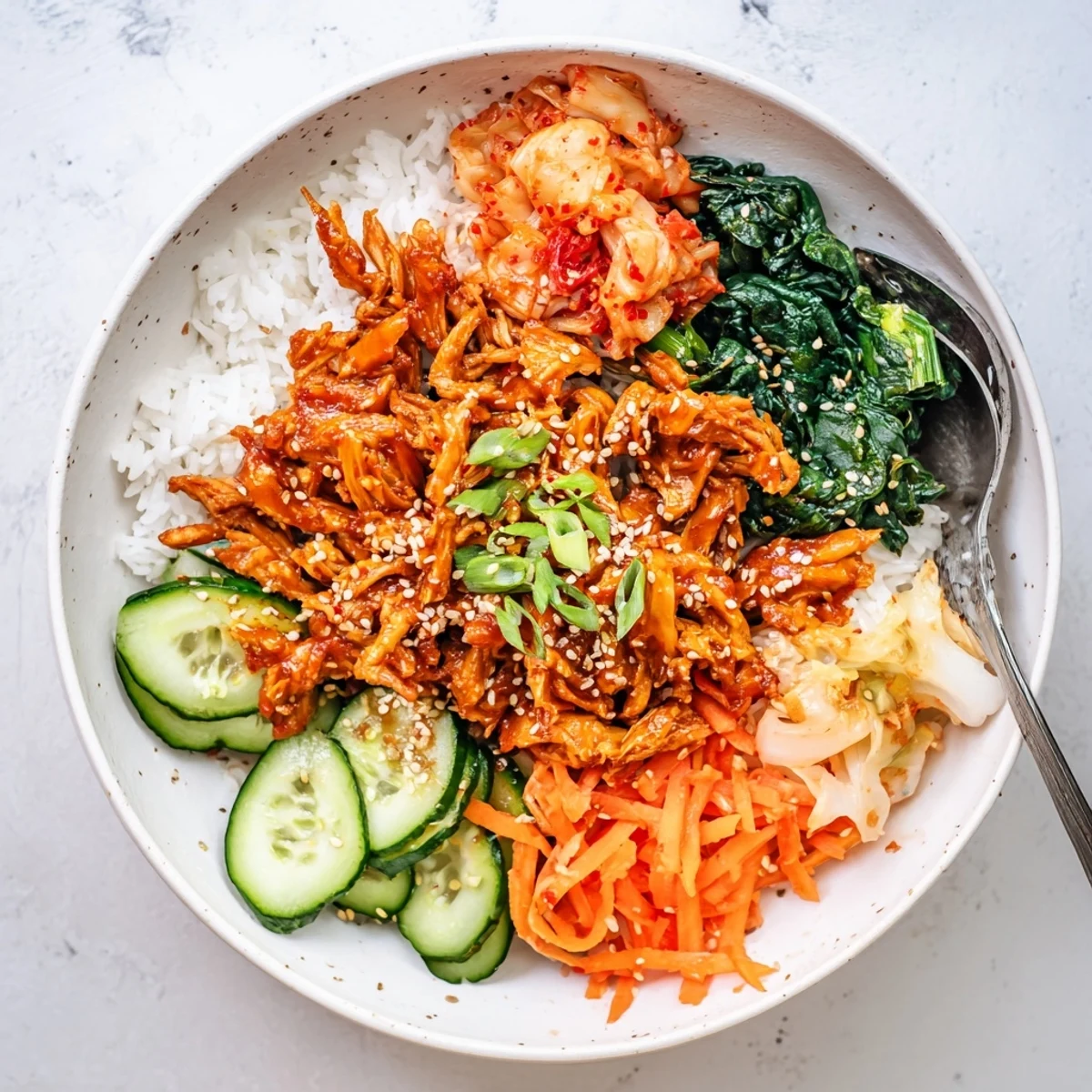
Save This bowl became my go-to comfort meal during a stretch of rainy weekends when leaving the house felt like too much effort. Something about the warm rice and that sticky, spicy tofu made even the grayest afternoon feel a little more alive.
Picking the Right Rice Matters More Than You Think
I once tried this with jasmine rice because it was all I had and the bowl fell apart structurally. Short-grain rice clings to the tofu and sauce instead of letting everything scatter around the bowl like a sad deconstructed salad.
The Tofu Pressing Step Is Not Optional
Early on I skipped pressing because I was impatient and ended up with soft, gummy shreds that soaked up sauce like a sponge without ever crisping. Now I press for at least 20 minutes with a heavy skillet on top and the difference is night and day.
Building Your Bowl Like You Mean It
Arranging the veggies in sections around the rice instead of dumping everything in the center makes the bowl feel intentional and gives you a different flavor combination in every bite. It takes maybe thirty extra seconds and completely changes the experience.
- Put the spinach on one side so its sesame flavor does not bleed into the raw cucumber
- Nestle the kimchi in a small corner where its brine can seep into the rice without overpowering the tofu
- Serve the bowl in something wide and shallow rather than a deep soup bowl so nothing gets buried
 Save
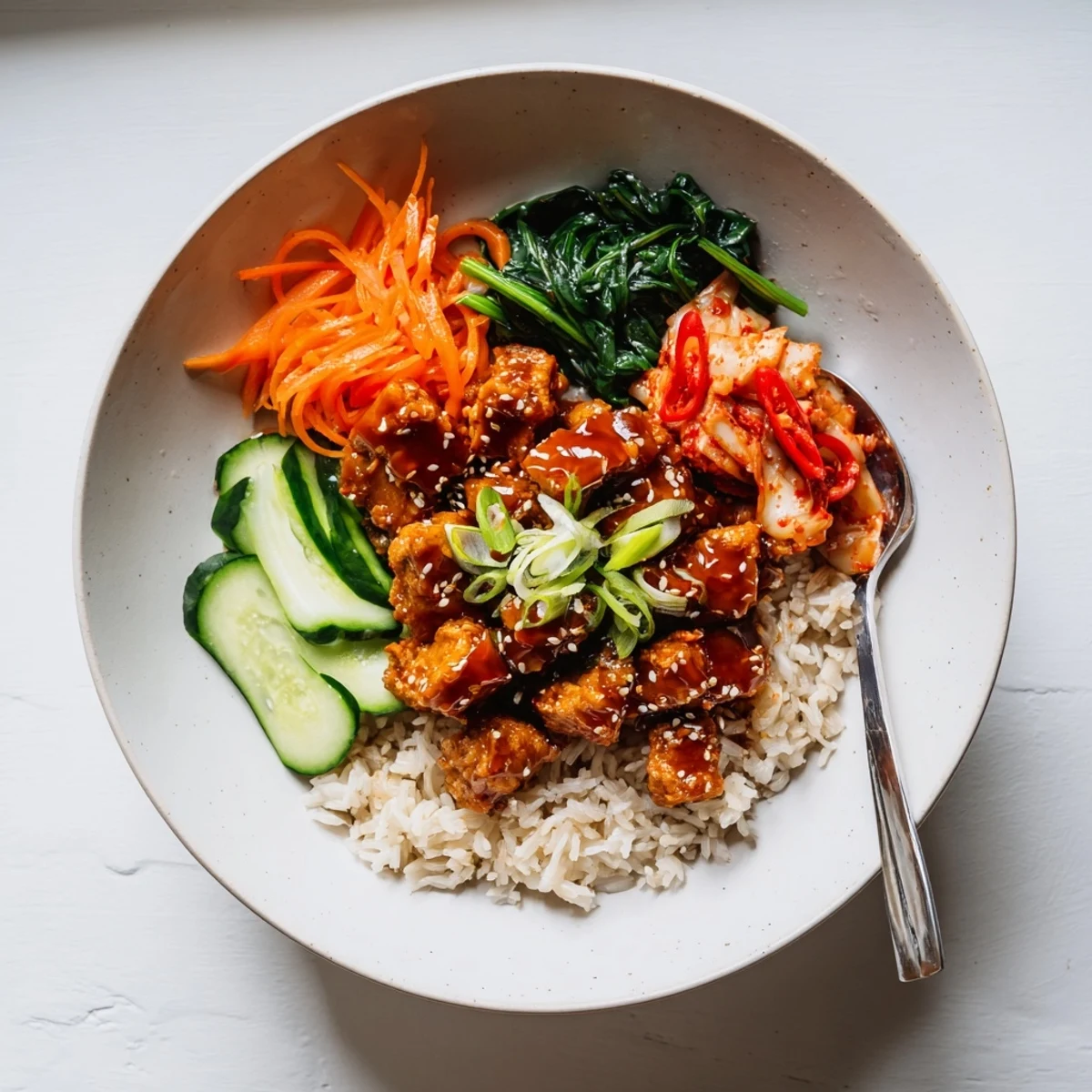
Save Good food does not have to be complicated or expensive. Sometimes it is just tofu, a well-made sauce, and the willingness to stand in your kitchen a little longer than you planned.
Questions & Answers
- → How do I get the tofu really crispy?
-
Press and drain the tofu thoroughly, shred it into small pieces, and toss with cornstarch before baking at 220°C or pan-frying in batches. The cornstarch creates a light crust that stays crispy once coated in sauce.
- → Can I make this gluten-free?
-
Yes. Replace the soy sauce with tamari and make sure your gochujang is certified gluten-free. Double-check labels on kimchi and any store-bought sauces as well.
- → What can I substitute for gochujang?
-
Sriracha works as a substitute if you cannot find gochujang, though the flavor profile will shift slightly. Gochujang brings a fermented depth that sriracha lacks, but the heat level will be similar.
- → Can I prep this ahead for meal prep?
-
The tofu is best tossed in sauce and served fresh for maximum crispiness, but you can prep the rice, chop the veggies, and mix the bulgogi sauce up to three days ahead. Store everything separately and assemble when ready to eat.
- → What other toppings work well in this bowl?
-
Sautéed mushrooms, bean sprouts, sliced avocado, quick-pickled radish, or a soft fried egg (if not keeping it vegan) all complement the flavors nicely. A drizzle of extra sesame oil or a squeeze of lime at the end adds brightness.
- → Is brown rice a good substitute for white rice?
-
Absolutely. Brown rice adds more fiber and a nuttier flavor that pairs well with the bulgogi sauce. Just account for the longer cooking time — brown rice typically takes around 40-45 minutes compared to 20 minutes for short-grain white rice.