
 Save
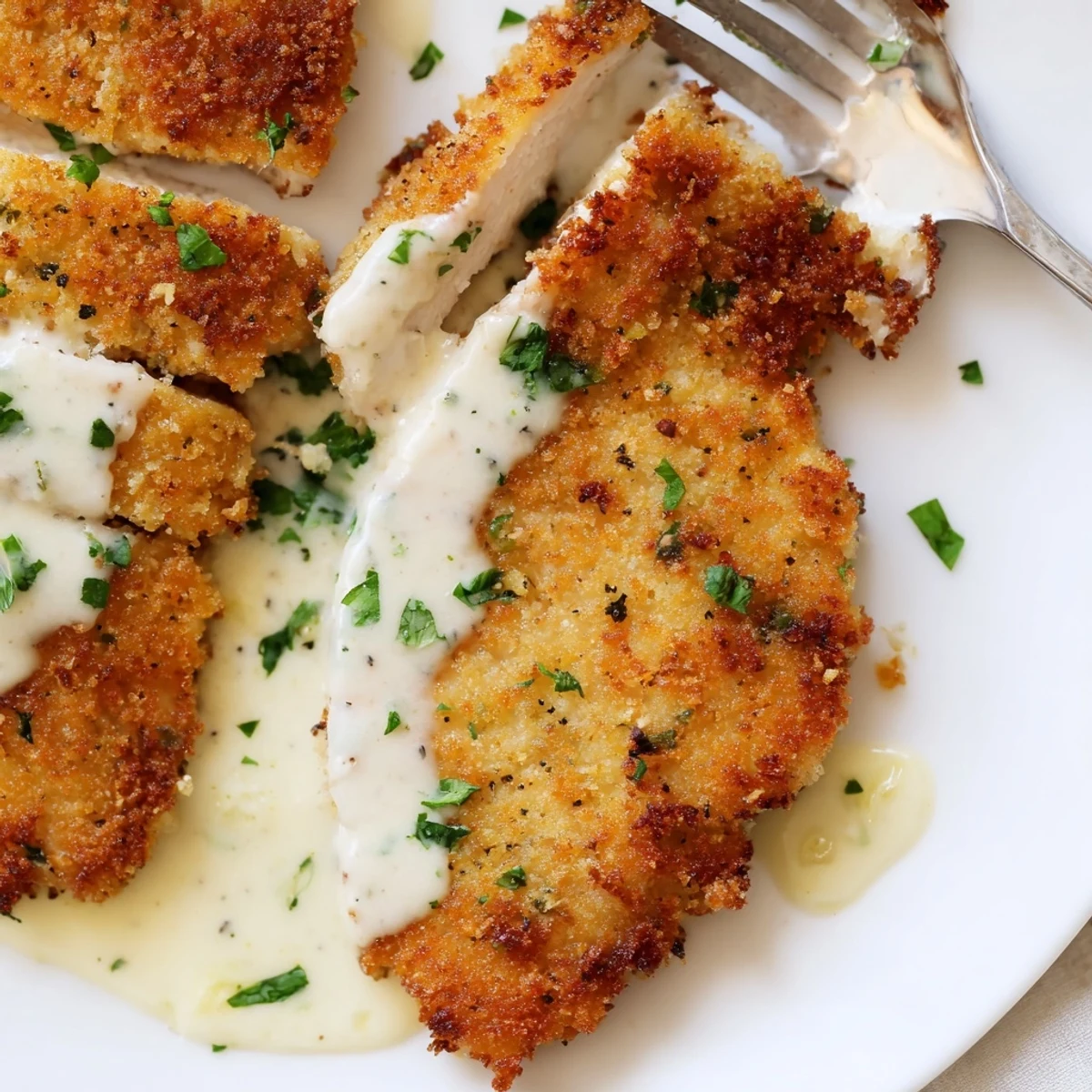
Save This crispy Parmesan chicken delivers a satisfying crunch thanks to a panko and Parmesan coating that fries up golden brown. The chicken is pan-seared for color and finished in the oven for juicy, evenly cooked meat.
What truly elevates this dish is the creamy garlic sauce — a luscious blend of butter, sautéed garlic, heavy cream, and melted Parmesan that simmers into a silky finish. A sprinkle of fresh parsley adds brightness and color.
Ready in just 45 minutes with simple everyday ingredients, this Italian-American favorite works beautifully for both weeknight dinners and special occasions. Pair it with pasta, mashed potatoes, or steamed vegetables for a complete meal.
The sizzle of parmesan hitting hot olive oil is a sound that once made my neighbor knock on my door asking what on earth I was cooking at seven in the evening on a Tuesday. That golden crust, shattering under the knife to reveal juicy chicken underneath, turned an ordinary weeknight into something that felt deliberate and celebratory. Creamy garlic sauce pooled around the edges of the plate, and honestly I stopped caring about the dishes piling up. Some meals are worth every dirty pan in the kitchen.
My sister walked in one Sunday carrying a bag of groceries and announced she was done with bland chicken forever. We stood shoulder to shoulder at the counter, fingers coated in egg and crumbs, laughing about how neither of us owned a meat mallet so we used a heavy saucepan to even out the breasts. The sauce nearly boiled over because we got distracted catching up, but we saved it just in time. She now makes this for date nights and texts me photos every single time.
Ingredients
- 4 boneless skinless chicken breasts: Try to pick ones of similar thickness so they cook evenly without drying out.
- Salt and freshly ground black pepper: Season generously on both sides before breading for flavor that reaches the meat.
- 1 cup panko breadcrumbs: Panko gives a lighter crunch than regular breadcrumbs and holds up beautifully under the sauce.
- 1/2 cup grated Parmesan cheese for coating: Use the kind from the refrigerated section, not the shelf stable canister, for real melting texture.
- 1 tsp garlic powder: This seasons the crust from within so every bite carries subtle garlic warmth.
- 1 tsp dried Italian herbs: A mix of oregano and basil in the coating makes the kitchen smell like a pizza shop in the best way.
- 2 large eggs and 1 tbsp milk: The egg wash acts as the glue that locks the crust onto the chicken.
- 1/2 cup all purpose flour: The first dredge creates a dry surface for the egg to cling to properly.
- 2 tbsp unsalted butter for sauce: Butter gives the sauce a silky foundation that olive oil alone cannot replicate.
- 4 cloves garlic minced: Fresh garlic makes a noticeable difference here since the sauce has so few ingredients.
- 1 cup heavy cream: This is the body of the sauce and reducing it slightly concentrates the richness.
- 1/2 cup grated Parmesan for sauce: Adding cheese off the heat prevents graininess and keeps everything velvety smooth.
- 1/2 tsp dried thyme or Italian herbs for sauce: Thyme adds an earthy note that pairs naturally with cream and garlic.
- Salt and pepper for sauce: Taste before serving because Parmesan is already salty and the balance can shift quickly.
- 2 tbsp fresh parsley chopped: A bright finish that cuts through the richness and makes the plate look finished.
- 3 tbsp olive oil for frying: Just enough to crisp the exterior before the oven takes over the cooking.
Instructions
- Preheat and prepare:
- Set your oven to 200 degrees Celsius which is 400 Fahrenheit and line a baking sheet with parchment paper so nothing sticks during the finish.
- Season the chicken:
- Pat each breast completely dry with paper towels and season both sides well with salt and pepper.
- Build your breading station:
- Arrange three shallow bowls in a row with flour in the first, eggs whisked with milk in the second, and panko mixed with Parmesan, garlic powder, and herbs in the third.
- Bread each piece:
- Dredge a breast in flour and shake off the excess, dip it fully into the egg mixture, then press it firmly into the crumb mixture on both sides so every bit is coated.
- Fry until golden:
- Heat olive oil in a large skillet over medium high heat and fry the chicken three to four minutes per side until the crust is deeply golden and crispy, then move them to the baking sheet.
- Finish in the oven:
- Bake for ten to twelve minutes until the internal temperature hits 75 degrees Celsius or 165 Fahrenheit and the juices run clear.
- Make the garlic sauce:
- In a saucepan melt the butter over medium heat, add the minced garlic and stir for one minute until fragrant but not browned at all.
- Build the cream base:
- Pour in the heavy cream, add the Parmesan, thyme, salt and pepper, and simmer gently while stirring constantly for three to four minutes until it thickens enough to coat the back of a spoon.
- Serve and enjoy:
- Rest the chicken briefly then plate it with a generous drizzle of warm sauce and a scattering of fresh parsley over the top.
 Save
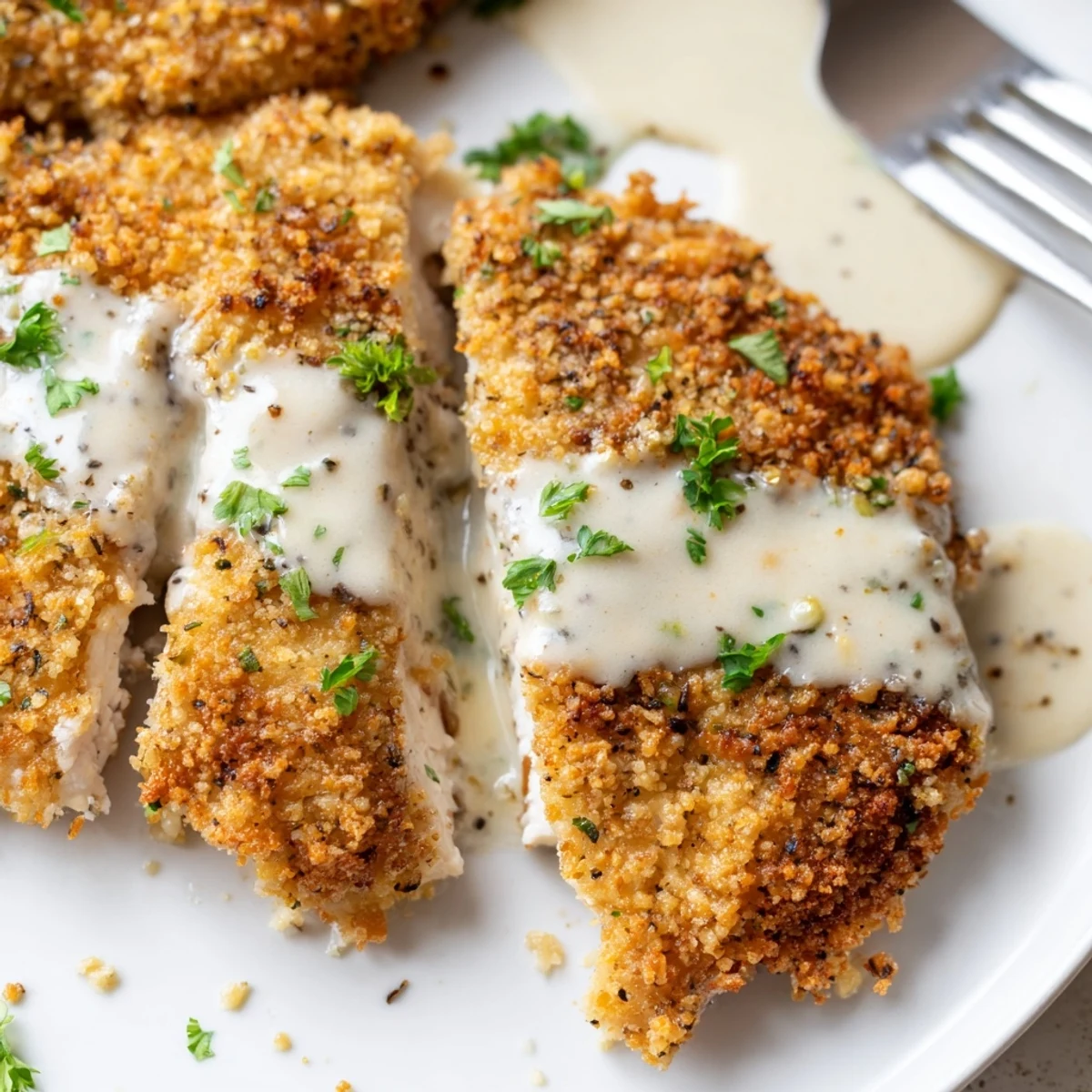
Save The first time I plated this for friends, the conversation stopped entirely for a full minute while everyone took their first bite. Someone actually closed their eyes and nodded slowly, which is the highest compliment a home cook can receive without words.
What to Serve Alongside
This chicken loves something starchy to soak up extra sauce, and buttered pasta or mashed potatoes both do the job beautifully. A simple green salad with lemon vinaigrette cuts through the richness just enough to keep you going back for more.
Making It Your Own
Swap the thyme for a pinch of nutmeg in the sauce and suddenly it feels more French bistro than Italian kitchen. A squeeze of lemon juice stirred in at the end brightens everything and balances the heavy cream in a way that surprises people every time.
Storing and Reheating
Leftovers keep well in the fridge for up to three days but the crust softens overnight so reheating in a hot oven or air fryer works better than the microwave. Store the sauce separately if you can manage it because it reheats gently on the stove with a splash of cream. The chicken also makes an incredible sandwich the next day with cold sauce spread on toasted bread.
- Freeze unbreaded chicken with sauce in an airtight container for up to two months.
- Always reheat the sauce low and slow to prevent it from breaking or turning grainy.
- Taste the sauce again after reheating because flavors dull in the cold and might need a small pinch of salt.
 Save
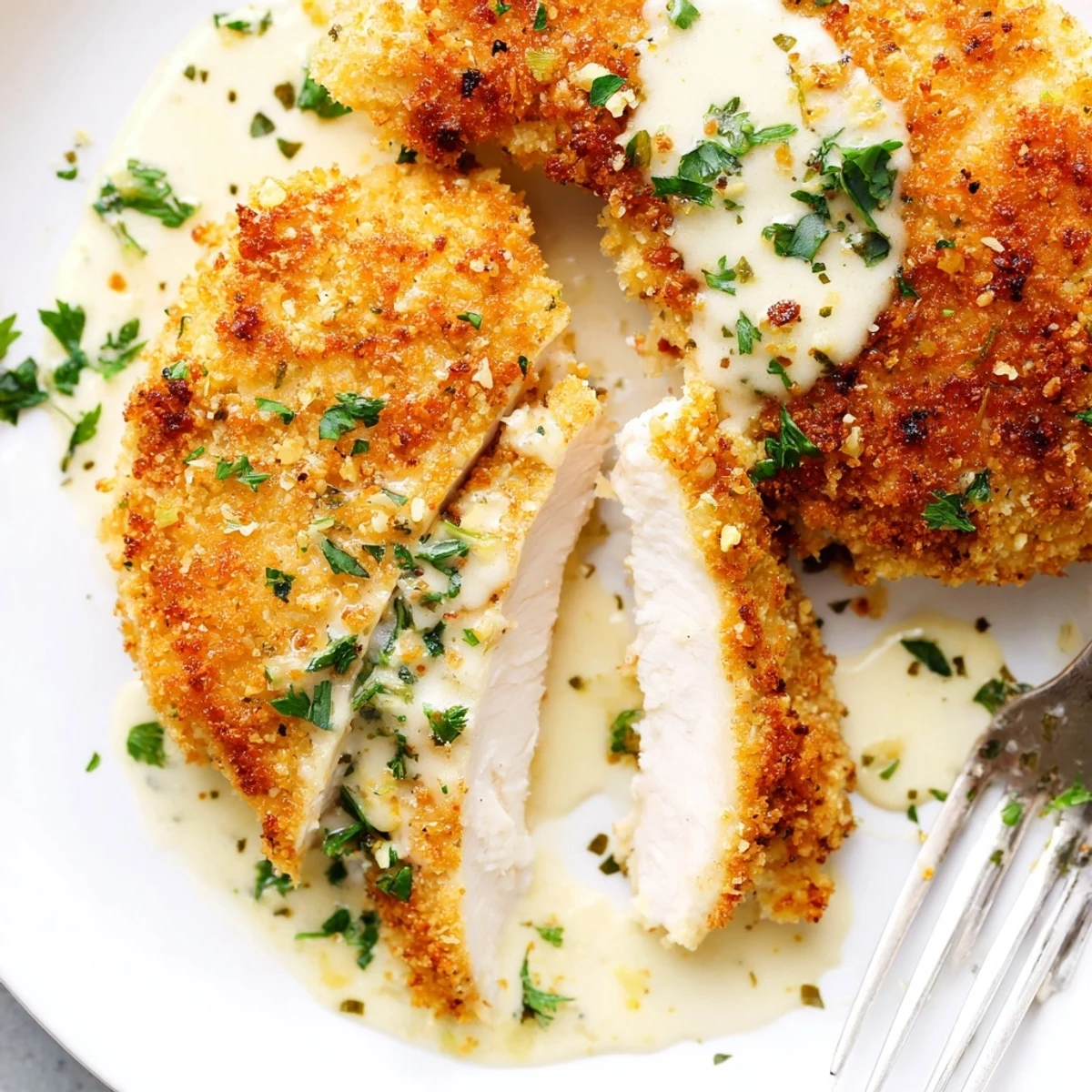
Save Keep this one in your back pocket for nights when you want to feel like you tried without actually spending hours in the kitchen. The sound of that crust cracking under a knife is all the reward you need.
Questions & Answers
- → Can I bake the chicken instead of pan-frying?
-
Yes, you can bake the breaded chicken directly at 200°C (400°F) for about 20–25 minutes, flipping halfway through. The crust won't be quite as crispy as pan-fried, but brushing the chicken with olive oil before baking helps achieve a golden finish.
- → How do I keep the crust from falling off?
-
Press the breadcrumb mixture firmly onto each chicken breast and let the coated chicken rest for 5 minutes before frying. Also, make sure your oil is hot enough — if the pan isn't properly heated, the coating can slide off. Don't flip the chicken too early; let it form a crust before turning.
- → Can I make the garlic sauce ahead of time?
-
The sauce is best served fresh, but you can make it up to a day ahead and refrigerate it in an airtight container. Reheat gently over low heat, stirring frequently. You may need to add a splash of cream to loosen it, as it thickens when chilled.
- → What can I substitute for heavy cream in the sauce?
-
Half-and-half works as a lighter option, though the sauce will be slightly less rich. For a dairy-free alternative, full-fat coconut cream provides a similar texture with a subtle sweetness. Avoid using low-fat milk, as it won't thicken properly when simmered.
- → How do I know when the chicken is fully cooked?
-
The most reliable method is using a meat thermometer — the internal temperature should reach 75°C (165°F) at the thickest part. If you don't have a thermometer, slice into the center; the meat should be completely white with no pink and the juices should run clear.
- → What sides go best with this dish?
-
Buttered pasta or linguine is a classic pairing that soaks up the extra garlic sauce beautifully. Mashed potatoes, roasted asparagus, steamed broccoli, or a simple green salad with vinaigrette also complement the rich flavors well. Crusty bread is great for sauce-dipping.